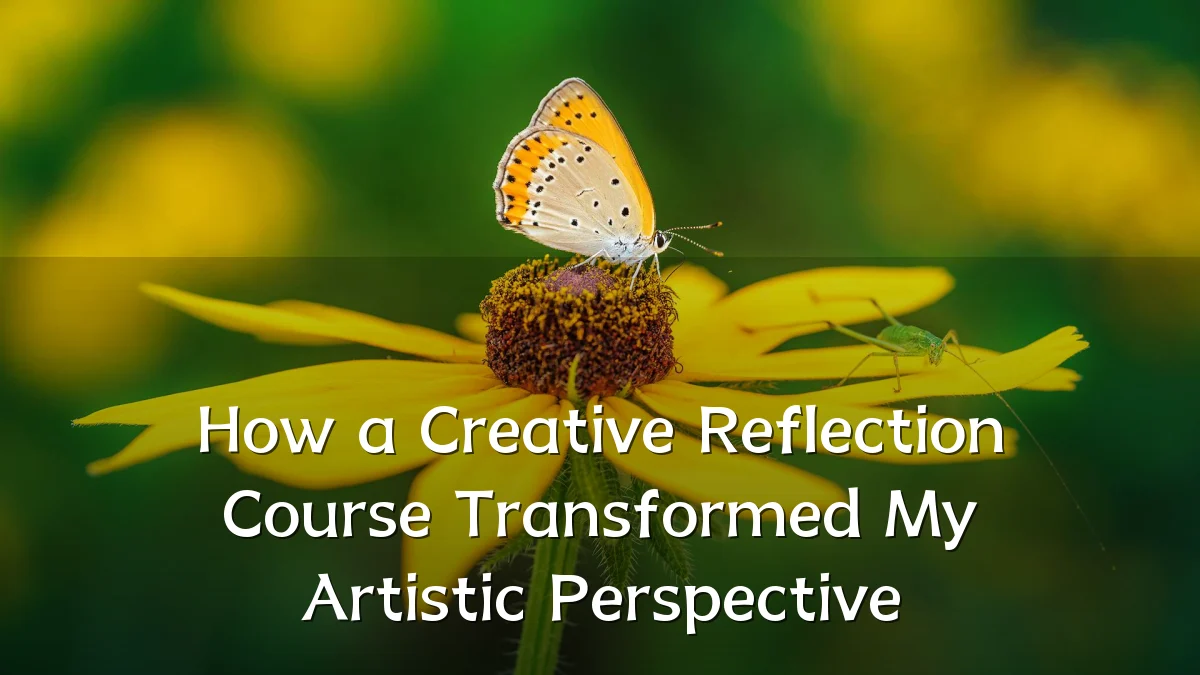
How a Creative Reflection Course Transformed My Artistic Perspective
Recent Trends in Artistic Development
In recent years, more artists have sought structured ways to deepen their creative practice beyond technical skill-building. Workshops and courses focusing on “creative reflection”—a blend of journaling, critique, and mindful observation—have grown in popularity. Social media discussions highlight a shift from output-driven art to process-oriented exploration, with many practitioners reporting renewed motivation after participating in such programs.
- Rise of online cohorts and hybrid retreats emphasizing introspective exercises.
- Increased interest in cross-disciplinary methods (e.g., combining visual art with written reflection).
- Artists citing burnout and a desire for “re-enchantment” with their work.
Background: What a Creative Reflection Course Entails
Typical courses in creative reflection are not about teaching new techniques—they guide participants through structured self-questioning, peer feedback sessions, and time-bound exercises that reframe how one sees finished pieces and failures alike. Foundational practices include daily observation sketches, written “artist statements” for old works, and group critique formats that focus on intention rather than outcome.

- Modular curriculum: may last from a weekend to several weeks.
- Common tools: prompts, timelines, reflective logs, and collaborative review.
- Often led by practicing artists or educators trained in aesthetic philosophy.
User Concerns and Common Hesitations
Artists considering such courses frequently worry about excessive self-critique, time investment without clear portfolio payoff, or the risk of feeling “too introspective” without actionable change. Others question whether structured reflection stifles spontaneous creativity. Practitioners report that early discomfort often gives way to a more forgiving and adaptive artistic mindset.
- Fear of overanalyzing creative instincts.
- Concern that course structure may feel prescriptive rather than freeing.
- Skepticism about peer feedback in online settings.
Likely Impact on Artistic Practice
Based on aggregated participant accounts, the most consistent outcome is a recalibrated sense of purpose: artists finish courses with clearer personal criteria for judging their own work and a stronger ability to articulate their intentions. Many report reduced perfectionism and increased willingness to experiment in unfamiliar mediums. Some find that reflective habits persist beyond the course, becoming a permanent part of their studio routine.
- Greater clarity in project selection and editing.
- Improved resilience after rejected submissions or stalled works.
- More nuanced and empathetic critique of others’ art.
What to Watch Next
As demand grows, expect creative reflection courses to become more specialized—for example, versions tailored to digital artists, writers, or collaborative teams. Watch for longer-term studies on how sustained reflective practice influences career longevity. Also note that some art schools are beginning to weave reflection modules into foundational curricula, potentially changing how emerging artists define success.
- Integration of AI tools to aid self-reflection (e.g., prompted journals).
- Partnerships between museums and reflective learning platforms.
- Publications that codify reflection exercises into reproducible guides.